The 16th International LISA Symposium is honored to present speakers covering a broad range of topics related to LISA, gravitational wave detection, and the many areas of science gravitational waves inform. Please continue to check back as new speakers will be added as they confirm participation in the conference.
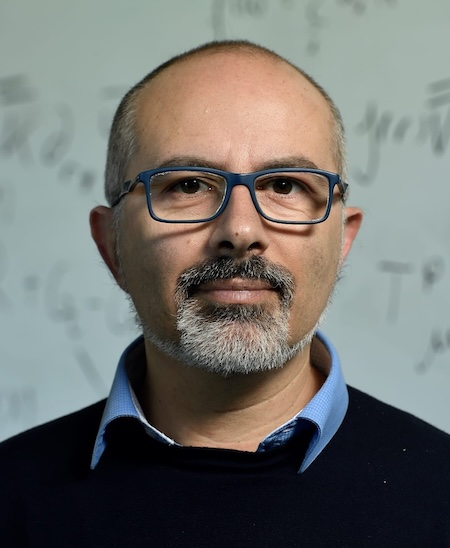
Tests of fundamental physics with LISA
Emanuele Berti
Johns Hopkins University
Emanuele Berti’s research focuses on black holes, neutron stars, gravitational-wave astronomy, and tests of general relativity. He is a Simons Investigator, a Fellow of the American Physical Society and former Chair of the Division of Gravitational Physics, a Fellow and former President of the International Society on General Relativity and Gravitation, a Fellow of the American Association for the Advancement of Science, and the recipient of the 2023 APS Richard A. Isaacson Award in Gravitational-Wave Science.
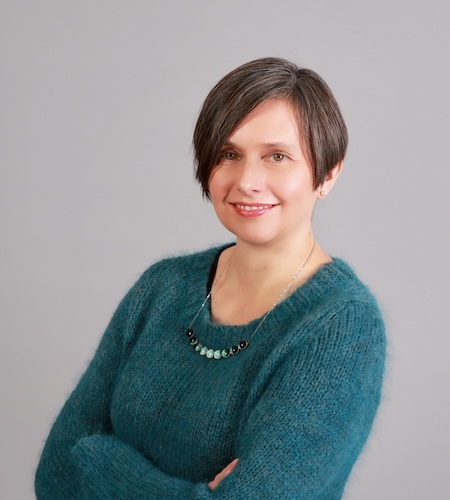
Modeling gravitational wave signatures of supermassive black hole binary populations
Laura Blecha
University of Florida
Laura Blecha is an Associate Professor of Physics at the University of Florida. She received a Ph.D. in Astronomy & Astrophysics from Harvard University and was a NASA Einstein Fellow and a Joint Space-Science Institute Prize Postdoc at the University of Maryland before joining the UF faculty. She is the Astrophysics Working Group Co-Chair of NANOGrav and a Core Member of the LISA Consortium, and her research focuses on modeling gravitational-wave source populations and the co-evolution of supermassive black holes and galaxies.
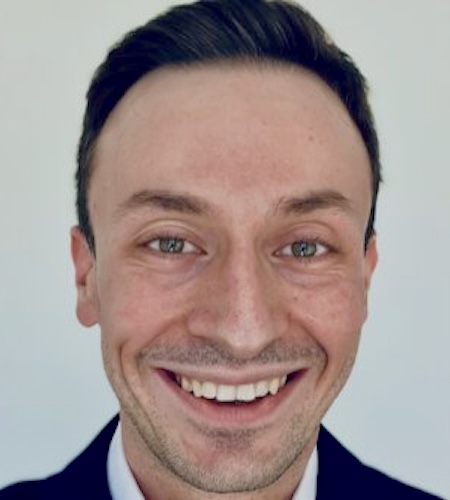
Ultracompact Binaries: LISA's Premier Multi-Messenger Laboratories
Kevin Burdge
Massachusetts Institute of Technology
Kevin Burdge is an Assistant Professor of Physics at MIT. His group has discovered roughly two-thirds of all known ultracompact binaries with orbital periods under 15 minutes--the systems sitting near the peak of the LISA sensitivity band. This work combines wide-field time-domain surveys (ZTF, and increasingly Rubin and Roman) with GPU-accelerated periodicity searches and multi-wavelength follow-up to characterize individual sources as multi-messenger anchors for LISA. He also leads the development of Lightspeed, a high-speed imager for the Magellan Clay Telescope built to characterize the electromagnetic counterparts of LISA sources, with the hope of developing a next-generation high-speed imaging and spectroscopy instrument for the Giant Magellan Telescope to serve as the premier facility for multi-messenger follow-up of LISA's electromagnetic counterparts. Burdge received his B.S. from MIT in 2015 and his Ph.D. from Caltech in 2021, and returned to MIT as a Pappalardo Fellow before joining the faculty in 2025.
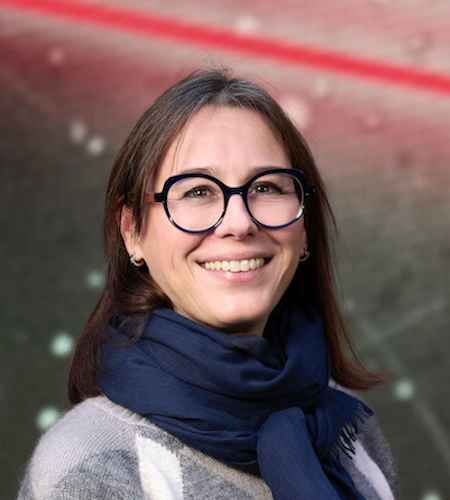
Cosmology with LISA
Chiara Caprini
CERN and University of Geneva
Chiara Caprini is staff at the Department of Theoretical Physics of CERN and Professor at the University of Geneva, on leave from CNRS (France). She is the founder of the LISA Cosmology Working Group and presently a member of the LISA Science Team. Her expertise focuses on how to use LISA observations to probe Cosmology, both the late-time and early universe.
Image Credit: Marina Cavazza/CERN
Prospects for discovering massive black hole binaries in time-domain surveys (before LISA)
Maria Charisi
Washington State University & IA-FORTH (Greece)
Maria Charisi is the W. Band assistant professor of physics at Washington State University and a research Fellow at the Institute of Astrophysics at FORTH, Greece, where she holds an ERC starting grant. Before that she was a VIDA fellow at Vanderbilt University and a NANOGrav fellow at Caltech. She got her PhD in Astronomy from Columbia University. Her research focuses on multi-messenger observations of supermassive black hole binaries.
Standard sirens from ground- and space-based missions in the next decade
Hsin-Yu Chen
The University of Texas at Austin
Hsin-Yu Chen is an assistant professor in the Department of Physics at UT Austin. She previously co-chaired the LISA Consortium Cosmology Working Package. Her research interests lie in gravitational-wave multi-messenger cosmology and nuclear astrophysics.
The importance of accurate waveform models for LISA
Alvin Chua
National University of Singapore
Alvin Chua is an assistant professor in the physics, mathematics and statistics departments at the National University of Singapore. He has held postdoctoral appointments at Caltech and the NASA Jet Propulsion Laboratory, and obtained his PhD from Cambridge. His current research interests are in gravitational-wave astrophysics and data analysis, data science and machine learning, as well as applied and computational statistics.
An Overview of the LISA Optical Metrology System
Ryan DeRosa
NASA Goddard Space Flight Center
Ryan DeRosa is the LISA Mission Systems Scientist at NASA Goddard Space Flight Center. His research focuses on instrumentation for interferometric gravitational wave detectors. He has been part of the NASA LISA development team since 2017. Before that he was part of the LIGO commissioning team, from the Enhanced LIGO experiment through the era of first discoveries.

GRS overview
Rita Dolesi
University of Trento & Istituto Nazionale di Fisica Nucleare (INFN)
Rita Dolesi is Associate Professor at the Department of Physics, University of Trento and associated member of the Istituto Nazionale di Fisica Nucleare (INFN). She was a core member of the LISA Pathfinder Team and now is the Deputy PI on behalf of ASI of the italian contribution to LISA, the Gravitational Reference Sensor. She is playing leading roles in the design, prototyping, and testing of GRS, in laboratory torsion pendulum experiments for small-force measurements, in close collaboration with aerospace industries and space agencies involved in LISA .
![Picture of Francisco Duque with an
out-of-focus background. Image Credit: sevens[+]maltry](img/speaker_img/Francisco_Duque.jpeg)
Astrophysical Environmental Effects in Extreme-Mass-Ratio Inspirals
Francisco Duque
Max Planck Institute for Gravitational Physics (Albert Einstein Institute)
Francisco Duque is a postdoc researching how astrophysical environments in galactic centres, like accretion disks or dark matter structures, influence the formation, evolution and gravitational-wave signal of binary coalescences and thinking about strategies on how to detect these effects with LISA. He has recently been elected junior co-chair of the Fundamental Physics Working Group.
Image Credit: sevens[+]maltry
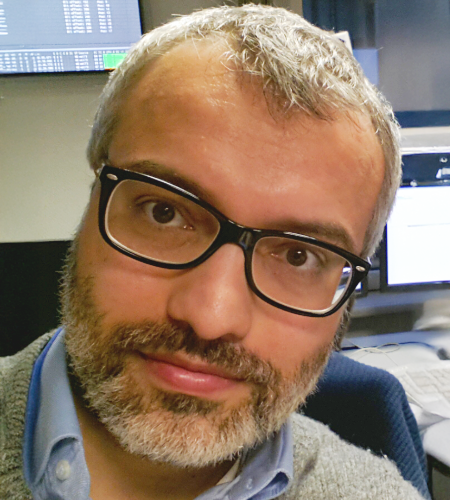
The LISA GRS sensing and actuation electronics (GRS FEE); Legacy and Perspective for LISA
Luigi Ferraioli
ETH Zurich
Dr. Luigi Ferraioli is lead engineer for the development of the GRS sensing and actuation electronics. After his PhD at the
University of Trento, he worked for 4 years as Postdoctoral Researcher in the group of Prof. Stefano Vitale on the development
of the data analysis procedures for LISA Pathfinder. Then he moved to APC Paris for 2 years where he worked on LISA Pathfinder
data analysis and the LISA proto DPC.
Since 2013 he is at ETH Zurich where he has worked on the processing, calibration
and analysis of the LISA Pathfinder mission data. After the completion of the LISA Pathfinder mission, he moved in his current
role as technical and performance lead for the GRS sensing and actuation electronics. In parallel to his main activity, he
also supervised the development of several high-performance electronic units for the control of accelerometer system for space
navigation, scientific and seismic applications.
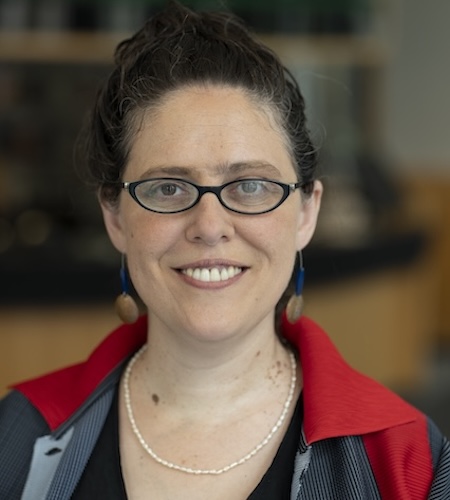
Astrophysics and EMRIs: NSCs, TDEs, AGNs, QPEs, CLQs and all the acronyms, oh my!
K.E. Saavik Ford
City University of New York BMCC/Graduate Center
American Museum of Natural History
Prof. Ford is the co-originator of the AGN channel for producing merging stellar mass binary black holes (as detected by LIGO), and continues to work on the theoretical underpinnings of the channel, attempting to use a combination of GW and EM (electromagnetic) observations to better understand AGN disks and their interactions with Nuclear Star Clusters. She is broadly interested in the consequences of having 'things' in AGN disks, including stellar mass black holes, neutron stars, white dwarfs, and main sequence stars.
Image Credit: Alex Irklievski

State of the Profession
Kelly Holley-Bockelmann
Vanderbilt/Fisk/SRON
Kelly is currently Stevenson Professor of Astrophysics at Vanderbilt University and Adjunct Professor of Physics at Fisk University, but left the US last month for Leiden to become a LISA Scientist at SRON. Her research is in computational astrophysics, galaxy dynamics, and massive black holes. She is the Deputy Spokesperson of the LISA Consortium, a recipient of the AAAS Distinguished Mentor Award, and founder of the EMIT Program, a graduate certificate in multimessenger astronomy that incorporates equity and inclusion work into all aspects of graduate education.
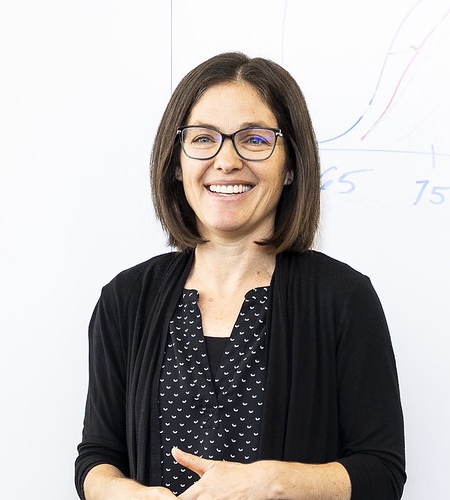
Gravitational wave observatories from the ground to pulsar timing arrays
Joey Shapiro Key
University of Washington Bothell
Joey Shapiro Key is an Associate Professor of Physics at the University of Washington Bothell serving as a member of the international LISA Science Team. She earned a PhD in Physics from Montana State University and a BA in Astrophysics from Williams College.
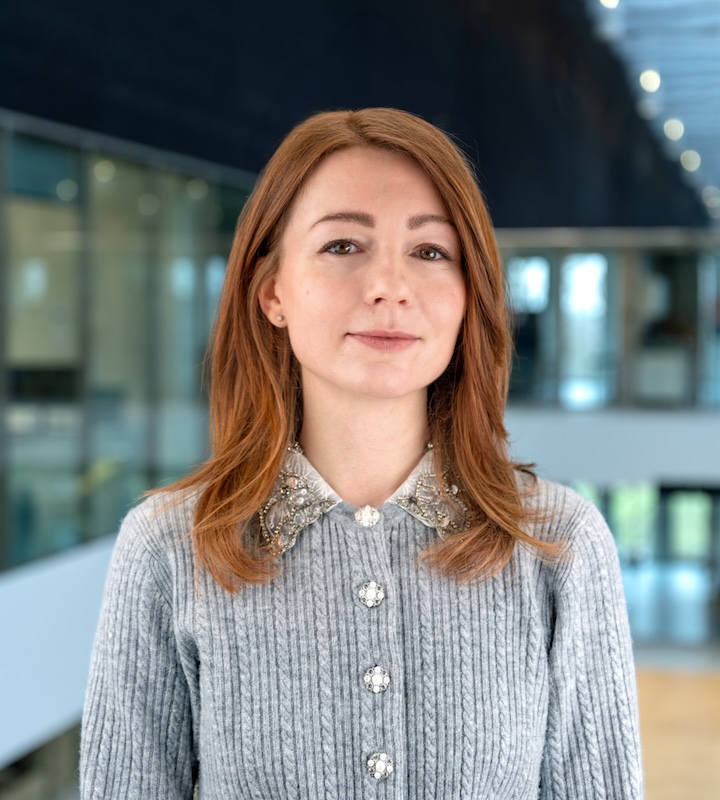
Update from the LISA Science Team
Valeriya Korol
SRON Space Research Organisation Netherlands
Valeriya Korol is a LISA scientist at SRON in Leiden and a member of the LISA Science Team. She is a theoretical astrophysicist working at the interface of electromagnetic and gravitational-wave astronomy. At SRON, she contributes to the scientific preparation of LISA, which will detect gravitational waves from thousands of compact binary systems in the Milky Way. Her research combines theory- and data-driven modeling with gravitational-wave analysis to use stellar remnant binaries as tracers of the Galaxy’s stellar mass distribution and past history.
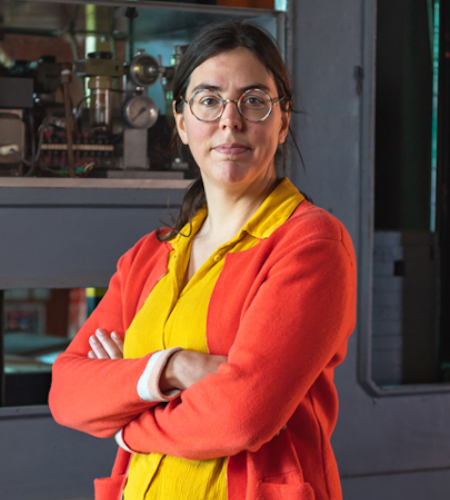
What will be in the LISA catalog?
Astrid Lamberts
CNRS - Observatoire de la Côte d'Azur
Astrid Lamberts is a gravitational wave astrophysicist working in Nice, France. She does population models for multimessenger science of the Milky Way and spends a lot of time thinking about making LISA data as user-friendly as possible. She is also one of the PIs of the French contribution to LISA.
Image Credt: Christophe Marcade
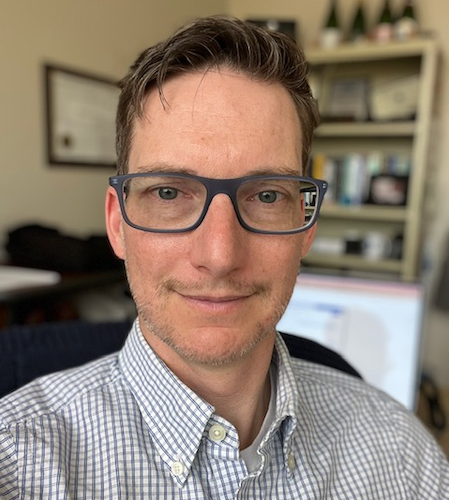
The Who What When Why and How of the LISA Global Fit
Tyson Littenberg
NASA Marshall Space Flight Center
Tyson Littenberg is a Research Astrophysicist at NASA Marshall Space Flight Center and the Lead Scientist for the NASA LISA Analysis Center, responsible for developing, implementing, and operating data analysis pipelines for the NASA LISA Project.
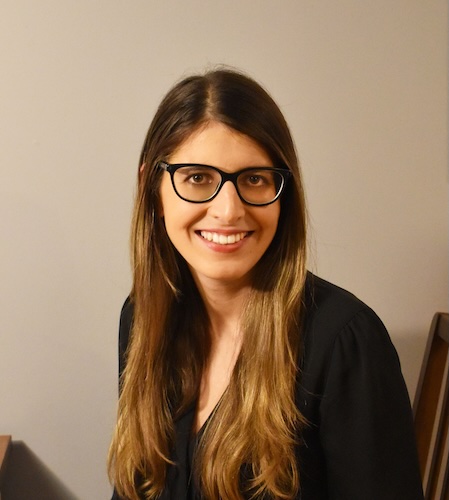
LISA Mission Overview and Status
Nora Lützgendorf
European Space Agency (ESA)
Nora is the LISA Lead Project Scientist at the European Space Agency (ESA) and is based at the European Space Research and Technology Centre (ESTEC) in Noordwijk, the Netherlands. She received her PhD in Astronomy from Ludwig‑Maximilians‑Universität working for the European Southern Observatory (ESO) in Munich, where her research focused on intermediate‑mass black holes in globular clusters. Before her role at LISA she worked as NIRSpec Instrument and Calibration Scientist at the Space Telescope Science Institute in Baltimore. Her scientific work centers on black holes, stellar systems, galaxy nuclei, and N‑body simulations.
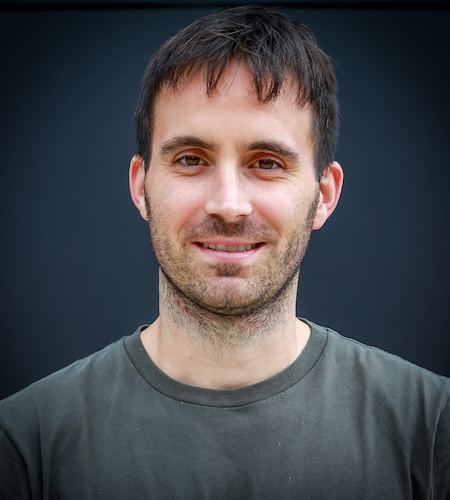
Massive Black Hole Binary waveforms for the Mojito Mock Data Challenge
Antoni Ramos-Buades
University of the Balearic Islands
Dr. Ramos-Buades's research centers on gravitational-wave source modeling, with an emphasis on numerical relativity studies of binary black hole systems. He works toward improving waveform accuracy for current ground-based detectors in the LIGO/Virgo/KAGRA collaboration and future space-based missions such as LISA, while also investigating the data analysis applications of these models.
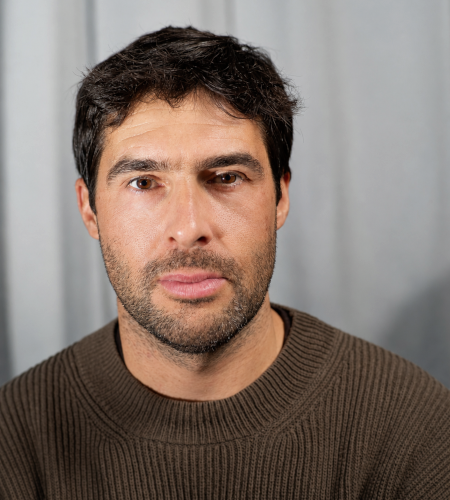
Engineering LISA
Juan Pablo Rodríguez García
European Space Agency
Juan Pablo Rodríguez is a Payload System Engineer for LISA at the European Space Agency, based at ESTEC in the Netherlands. He has previously worked on other ESA science missions, including PLATO and JUICE, contributing as an AIT/AIV Engineer and Electrical Engineer. His work focuses on the engineering, integration, and verification of complex spacecraft payload systems.
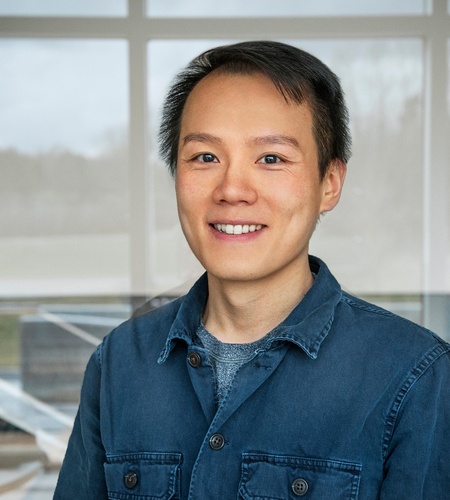
Challenges and Strategies for Telescope Follow-up of LISA MBHB Mergers
John Ruan
Bishop’s University
John is an Associate Professor at Bishop’s University in Quebec, Canada. He is broadly interested in time-variable electromagnetic emission from gravitational wave sources, as well as their host galaxy properties.
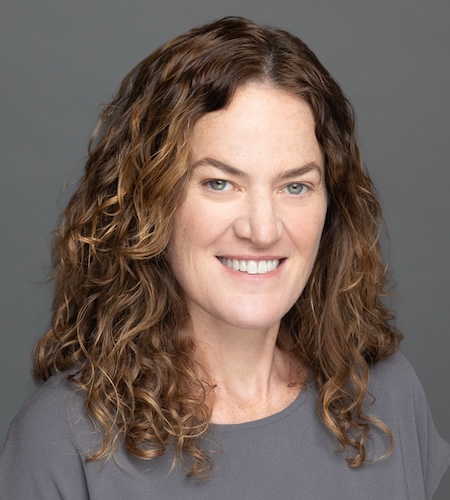
Challenges in waveform model development for LISA
Deirdre Shoemaker
University of Texas at Austin
Deirdre Shoemaker is a professor of physics and Director of the Center for Gravitational Physics at the Weinberg Institute, University of Texas at Austin. She is a member of the LISA Science Team.
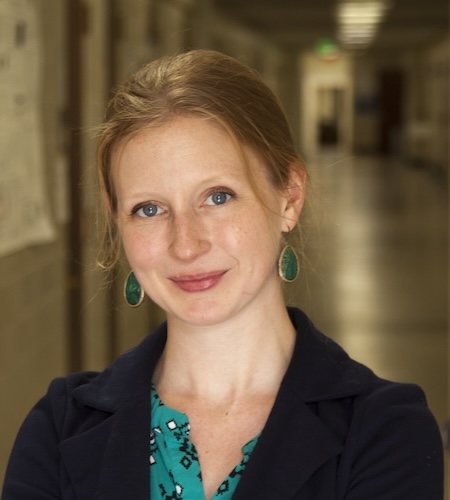
X-ray Astronomy in the LISA Era
Krista Lynne Smith
Texas A&M University
Krista Lynne Smith is an Associate Professor of Physics and Astronomy at Texas A&M University. Her research focuses on accretion onto supermassive black holes, the relativistic jets of blazars, AGN feedback and galaxy evolution, and binary supermassive systems. Dr. Smith specializes in massively multi wavelength astrophysics, using observatories from the Very Large Array in the radio to Fermi in gamma rays, with an emphasis on using exoplanet timing satellites like Kepler and TESS for high energy astrophysics. She is a member of the LISA Science Team, chair of the NICER User’s Group, serves on the AGN steering committee for Habitable Worlds Observatory, and a member of the AAS HEAD executive committee, as well as a Scialog Fellow focused on detecting binary AGN with LSST-Rubin.
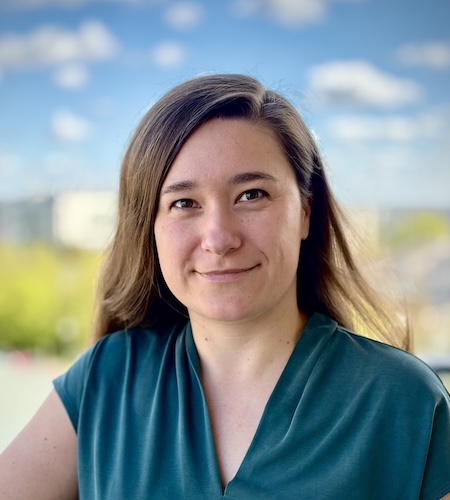
Probing symmetry breaking in the early universe with LISA
Bogumiła Świeżewska
University of Warsaw
Bogumiła Świeżewska is an Assistant Professor at the University of Warsaw, Poland. During her PhD she was mostly interested in Higgs physics. Later her research interests focused on studying phase transitions associated with symmetry breaking in the cosmological context. She aims at contributing to probing early-universe phenomena using LISA.
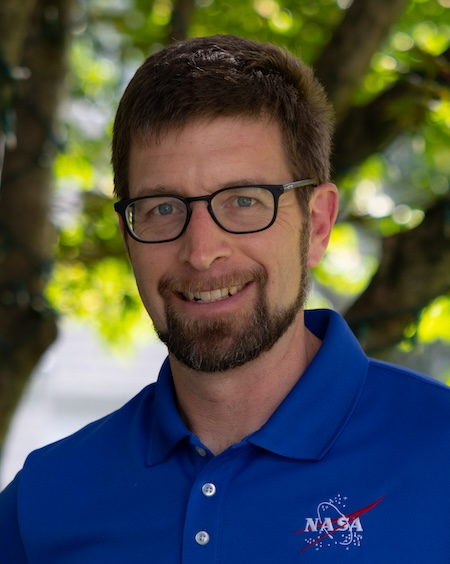
Listening to the dark universe with gravitational waves and LISA
Dr. Ira Thorpe
Goddard Space Flight Center
Dr. Ira Thorpe is a researcher at NASA’s Goddard Space Flight Center who has devoted his career to the development of the Laser Interferometer Space Antenna (LISA), an ambitious international effort to construct a star-sized scientific instrument to detect ripples in the fabric of space time known as gravitational waves. For over two decades, Dr. Thorpe has contributed to various aspects of LISA development including prototyping instrumentation in the laboratory, modeling different configurations of the instrument, developing data analysis techniques, and participating in a European-led on-orbit technology demonstrator mission. Dr. Thorpe is the LISA Project Scientist for NASA. He holds bachelors degrees in Mechanical Engineering and Physics from Bucknell University, a Masters Degree in Physics from The University of Maryland, and a Ph.D. in Physics from the University of Florida.
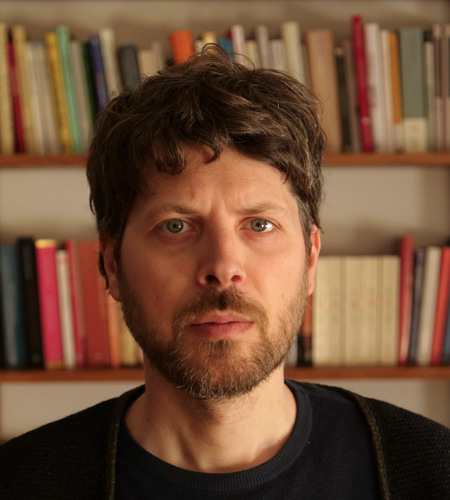
Ten Years After LISA Pathfinder: From Experimental Demonstration to LISA and Beyond
Daniele Vetrugno
Max Planck Institute for Gravitational Physics / Albert Einstein Institute
Daniele Vetrugno is a researcher at the Max Planck Institute for Gravitational Physics / Albert Einstein Institute, working on experimental aspects of space-based gravitational-wave detection and precision measurement for LISA and future missions beyond LISA. His interests include laser interferometry for space-based observatories and the characterization of force disturbances affecting free-falling test masses. He previously worked at the University of Trento, where he was directly involved in the in-flight operations of the LISA Pathfinder mission. He is particularly interested in how the experimental legacy of LISA Pathfinder informs the design, noise modeling, and validation of future space missions for gravitational-wave astronomy and fundamental physics.
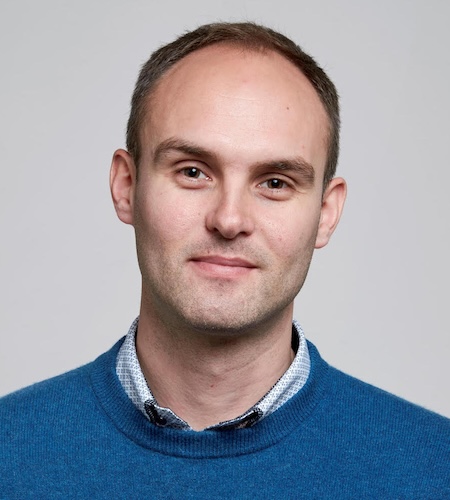
The LISA Consortium: updates and how to get involved
Niels Warburton
University College Dublin
Niels Warburton is a Lecturer/Assistant Professor at University College Dublin. His research focuses on the gravitational wave emission from small mass ratio binaries. In 2025 he was elected as the Spokesperson for the LISA Consortium. He also co-leads the Multiscale Self-force Collaboration and the Black Hole Perturbation Toolkit. From 2018 to 2024 he was a co-chair of the LISA Consortium Waveform Working Group.
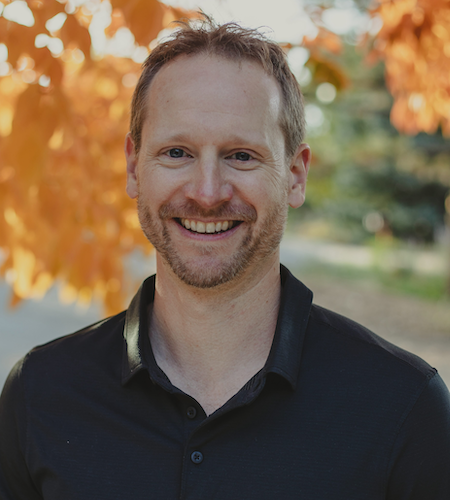
Tracking Time Variations in Earth’s Geopotential: Past, Present, and Future
David Wiese
Jet Propulsion Laboratory, California Institute of Technology
David Wiese is a Scientist in the Solid Earth and Ice Group at the Jet Propulsion Laboratory. He serves as the Deputy Project Scientist and Science Data Systems Manager for the NASA/DLR GRACE-Continuity mission. His research interests span the full life-cycle of collecting and interpreting satellite gravimetry measurements to improve understanding of Earth system mass change. He is a 2025 Clarivate Highly Cited Researcher and a past recipient of the NASA Early Career Achievement Medal.