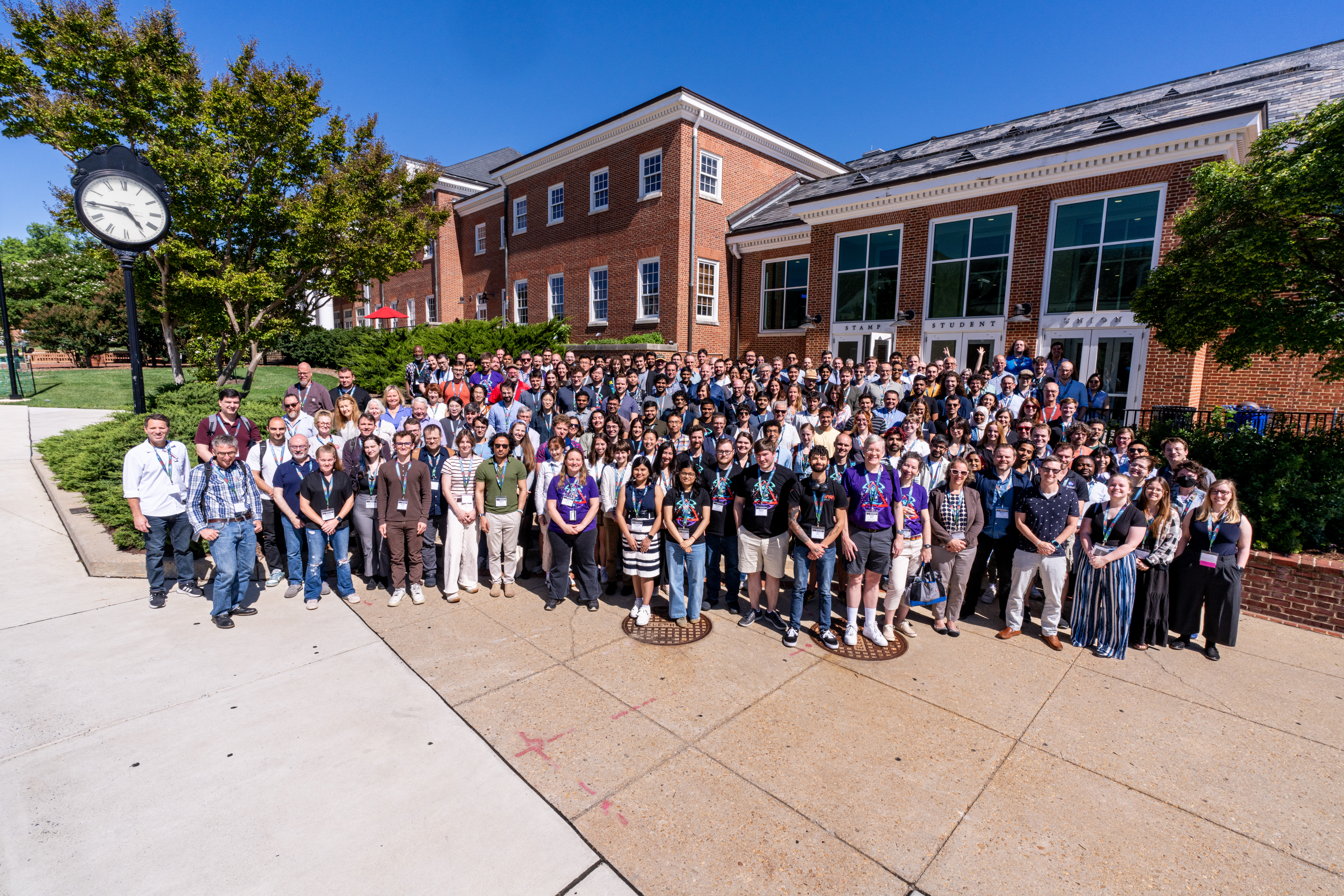
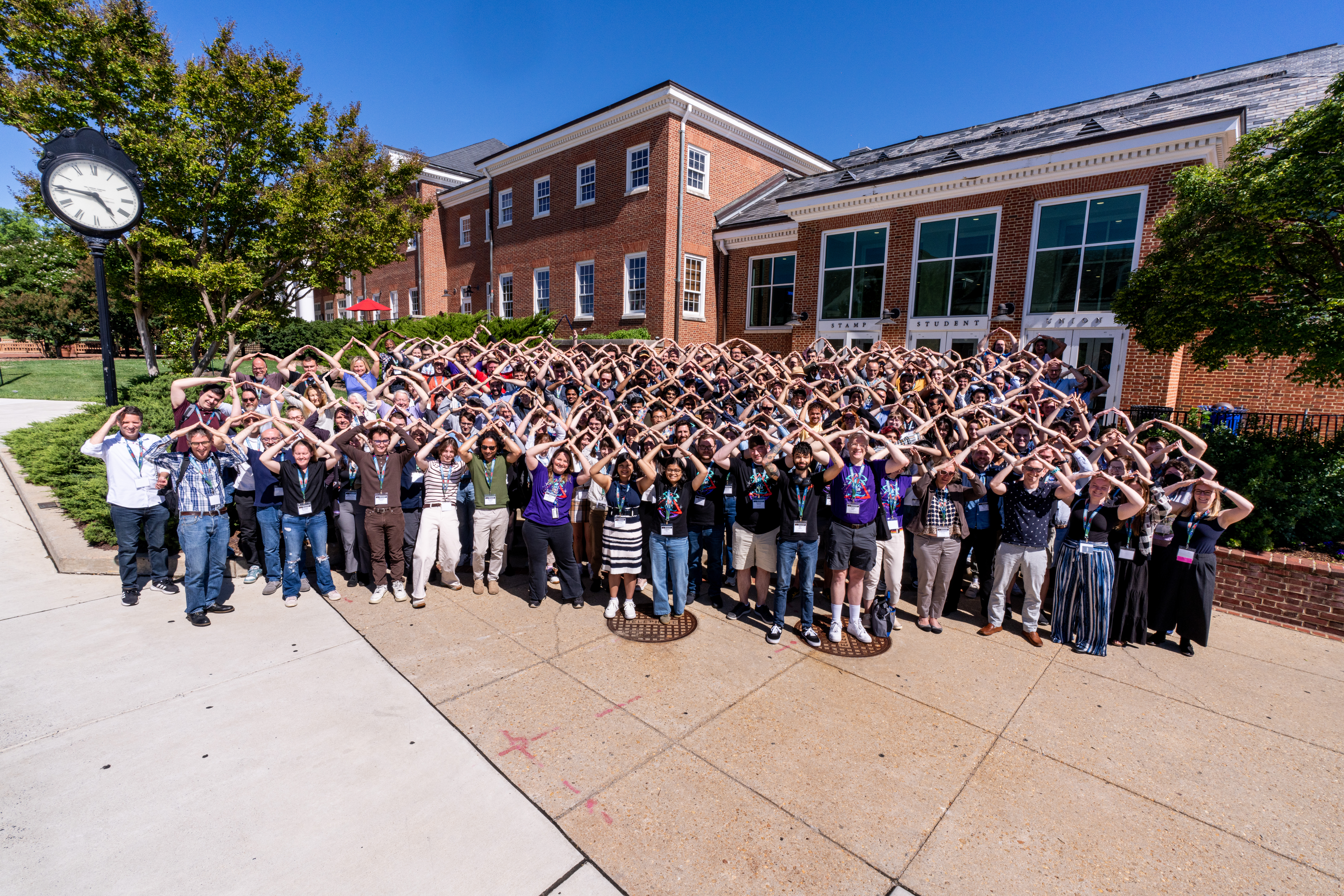
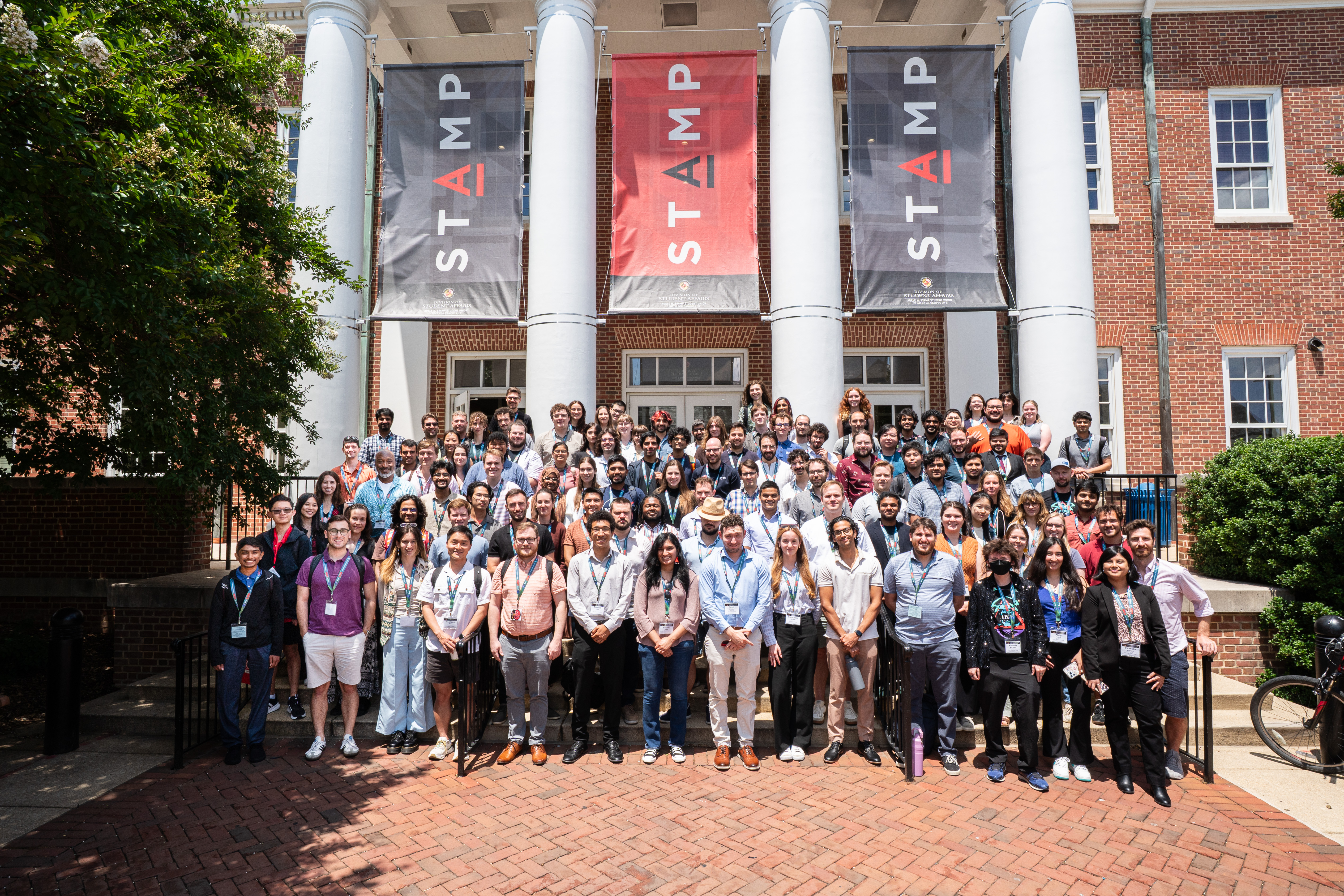
Thanks for a Fantastic Symposium!!
Official Hashtag
The official hashtag for social media posting for the 2026 LISA Symposium is:
#LISASymposium2026
Please use this hashtag when sharing information, pictures, and impressions of the meeting so that the whole world can join in!
Unable to attend?
We're sorry you can't make it! However, we will be streaming all plenary sessions via YouTube. You're welcome to join us each morning from 8:30 am to 12:30 pm Eastern Time at the @LISAcommunity YouTube channel.
Link to YouTube
About the LISA Symposium
We welcome you to the 16th International LISA Symposium! Continuing from past editions, the Symposium will highlight gravitational wave astrophysics, with a primary focus on the most up-to-date mission development, theory and analysis enabling the science to be done with the Laser Interferometer Space Antenna. The Scientific Organizing Committee is planning an engaging program of invited talks and special sessions to be complemented by your contributions of talks, posters, questions and discussions. We look forward to bringing together a wide cross-section of the international community, including students (with a discounted registration fee).
The Symposium will take place on the University of Maryland campus in College Park, Maryland, USA, beginning with registration and a welcome reception on the evening of Sunday, June 21. Scientific sessions (plenary, parallel and poster) will be held Monday through Friday, June 22 to 26, ending in the mid-afternoon on Friday. Breakfast and coffee breaks will be in the room where posters are displayed. A public lecture is being planned on Tuesday evening. Following tradition, Wednesday afternoon is kept open and a variety of local activities, ranging from organized to informal, will be available depending on your interests; details will be posted on this website.
We recognize the constraints and concerns about international travel and want to support scientists who are unable to attend in person while still maintaining the value of a lively in-person meeting. While remote attendance will be possible, the number of remote presentations will be limited and the selection of submitted abstracts will prioritize in-person talks and posters. Maryland prides itself on being a welcoming state and a home to many cultures, and we hope you will take part in symposium if you are able to.
Registration and abstract submission are now open. You may submit an abstract and register (and pay) all at once, or at different times.
Scientific Organizing Committee
- Shane Larson (Chair), Clarkson University
- Stanislav Babak, APC - Paris
- Richard Brito, Instituto Superior Técnico
- Maria José Bustamante Rosell, Fisk & Vanderbilt Universities
- Laurentiu Caramete, Institute of Space Science, Bucharest-Magurele
- Eleonora Castelli, University of Maryland, Baltimore County & NASA GSFC
- Maria Charisi, Washington State University & University of Crete
- Nelson Christensen, Observeratoire Cote d'Azur
- John Conklin, University of Florida
- Neil Cornish, Montana State University
- Daniel J. D'Orazio, Space Telescope Science Institute
- Deborah Ferguson, University of Rhode Island
- Alessia Franchini, Università degli Studi di Milano
- Daryl Haggard, McGill University, Trottier Space Institute
- Zoltan Haiman, Institute of Science & Technology Austria
- Sarah Vigeland, University of Wisconsin Milwaukee
- Stefano Vitale, Università di Trento
- Gudrun Wanner, University of Hannover, AEI-Hannover
- Niels Warburton, University College Dublin
- David Weir, University of Helsinki
- Helvi Witek, University of Illinois Urbana-Champaign
- William Joseph Weber, Università di Trento
Local Organizing Committee
- Peter Shawhan, University of Maryland
- Ann Hornschemeier Cardiff, NASA Goddard Space Flight Center
- Ira Thorpe, NASA Goddard Space Flight Center
- Elizabeth Ferrara, University of Maryland & NASA GSFC
- Bernard Kelly, University of Maryland, Baltimore County & NASA GSFC
- Cole Miller, University of Maryland
You can contact the Local Organizing Committee by email at
lisa2026-info@umd.edu
First held in 1996, the International LISA Symposium is held every two years to celebrate and share infornation and science related to the Laser Interferometer Space Antenna mission, a three-arm space-based gravitational wave detector being developed by the European Space Agency (ESA).
History
A listing of prior LISA Symposia and links to their websites can be found here.
Symposium Details and Travel Information
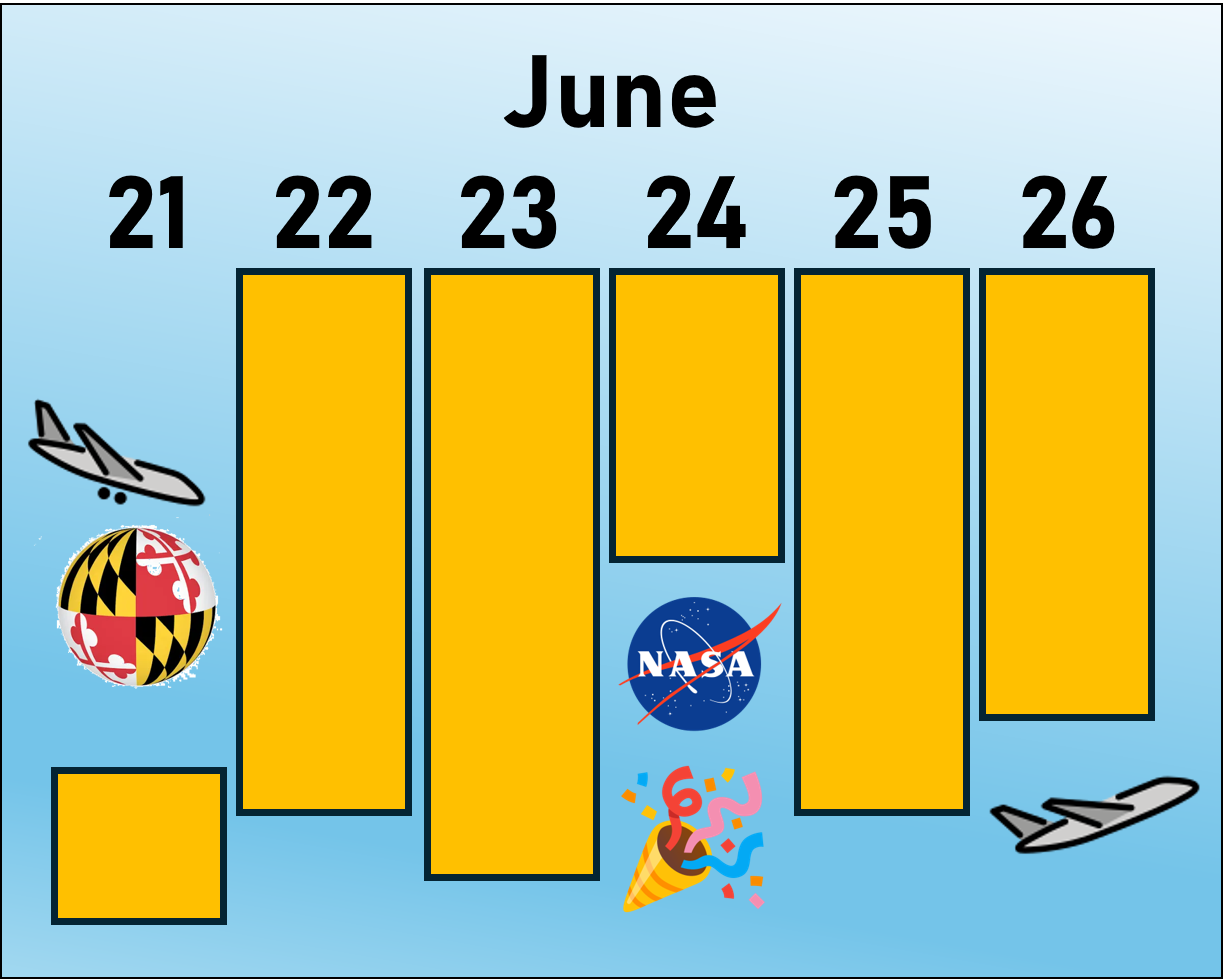
Symposium Program
The Symposium features a welcome reception on Sunday, June 21 and scientific sessions on Monday through Friday, June 22
to 26. A Public Lecture will be held on Tuesday evening, and Wednesday
afternoon is free for attendees to enjoy nearby attractions.
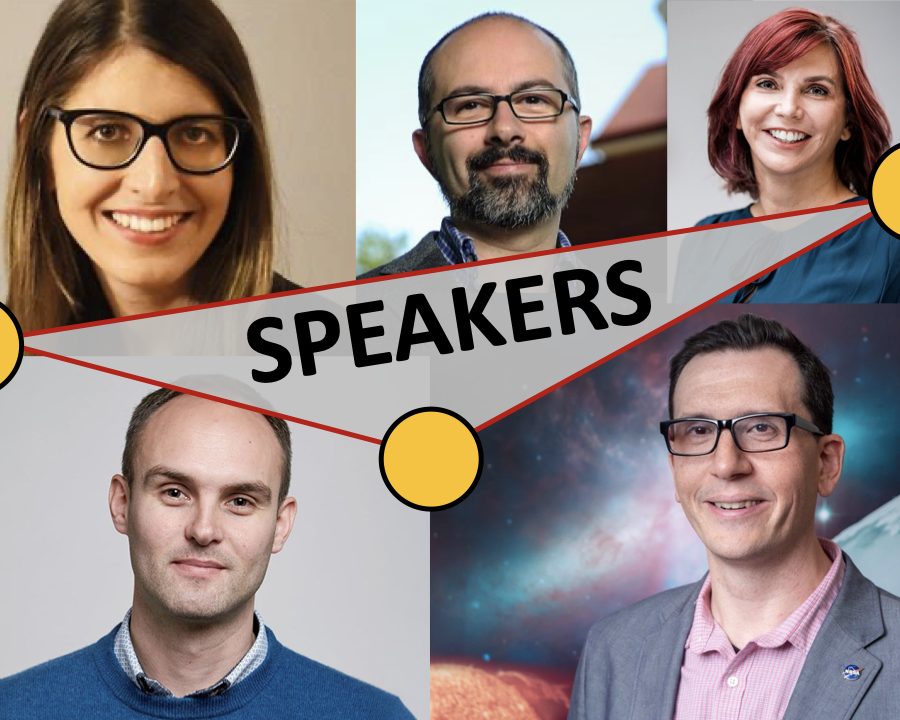
Featured Speakers
The Sympusium will cover a wide range of topics related to the LISA mission, gravitational waves, and how they will
inform astrophysics. Please check back frequently as more speakers will be added as they are confirmed.
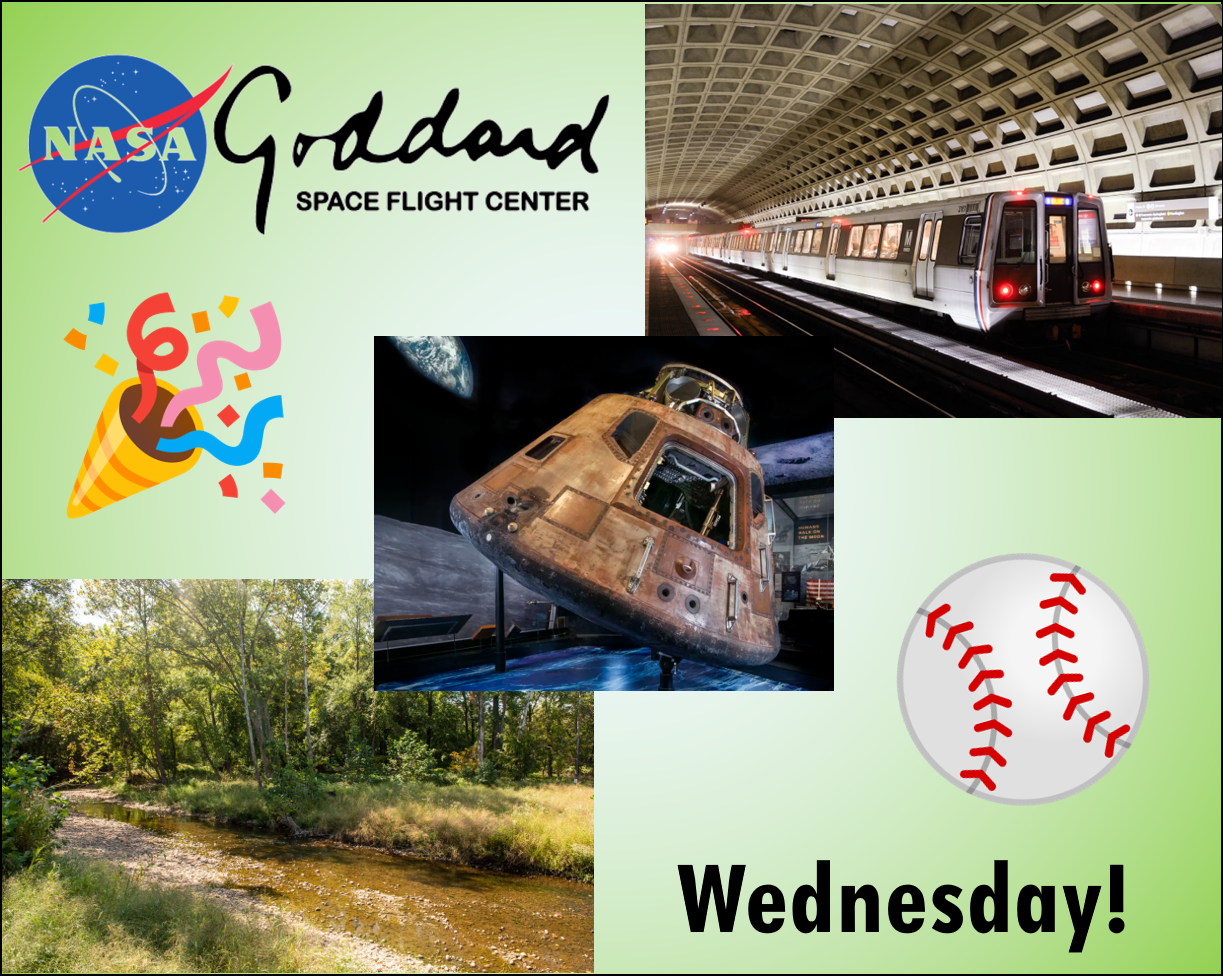
Wednesday Activities
The Symposium program features a break from the science program on Wednesday afternoon and evening. You are welcome to take part in one of our organized or informal activities, make your own plans, or just relax. Follow the link below to see what activites we are planning and suggesting.

Meeting Logistics
At the link below you will find more information about the meeting venue (the Stamp Student Union), nearby
hotels (including one with a discounted room block), bus
service between the hotels and the meeting venue, and parking.
Travel to Maryland
The Washington DC area is served by three airports as well as Amtrak trains and regional bus service. For more general
infomation on visiting Maryland, we recommend the Maryland Office
of Tourism website.
Code of Conduct
We believe all participants should feel welcome and safe. We take harassment and discrimination
of any kind very seriously. If you witness or experience a breach of the code of conduct outlined
below, contact a member of the organising committee at:
lisa2026-info@umd.edu.
Registration
Early
Registration
Non-Student: $575
Student: $345
Webinar: $150
- Closed March 16th
Regular
Registration
Non-Student: $675
Student: $445
Webinar: $200
- Closed May 15th
Late
Registration
Non-Student: $775
Student: $495
Webinar: $200
- Closed June 14th
Abstract Submissions
Abstract submissions have closed
The deadline for abstract submission was 10 April 2026. The Organizing Committee anticipates completing the review of all submissions and issuing notification of acceptance decisions by the end of April.
Travel Grants
Travel Grant Applications have closed
The application deadline was 27 March 2026. The organizers wish to thank NASA for supporting the LISA Symposium Travel Grants for this meeting.
More information is available here.